

Answer Engine Optimization is rapidly changing how brands approach content marketing and SEO. As AI-powered search experiences continue growing, content is no longer optimized only for rankings – it is now being optimized for retrieval, summarization, citations, and AI-generated answers.
In this deep dive, I give you my personal insights into how you can optimize content for answer engines. I will discuss:
- What Answer Engine Optimization (AEO) actually means
- Whether AI SEO differs from traditional SEO
- 14+ practical AEO strategies for content optimization
- How to improve authority, trust, and semantic relevance
- The importance of off-page mentions and omnichannel visibility
- What Google officially says about AI search optimization
- Real examples of how WPXPO gained visibility in AI search experiences
Sounds exciting? Then, let’s get started!
What is Answer Engine Optimization, and Why Should You Care?
Answer Engine Optimization is the process of structuring and optimizing your content so AI systems can:
- understand it clearly,
- retrieve it confidently,
- and potentially cite or reference it in generated answers.
Today, users ask questions directly to AI-powered systems like ChatGPT, Gemini, Perplexity AI, and AI Overviews in Google Search.
According to McKinsey & Company, nearly half of consumers are already using AI-powered search experiences.
At the same time, The Verge reports that Google’s AI Overviews reportedly reach more than 1.5 billion users every month.
So, the trend is pretty easy to follow.
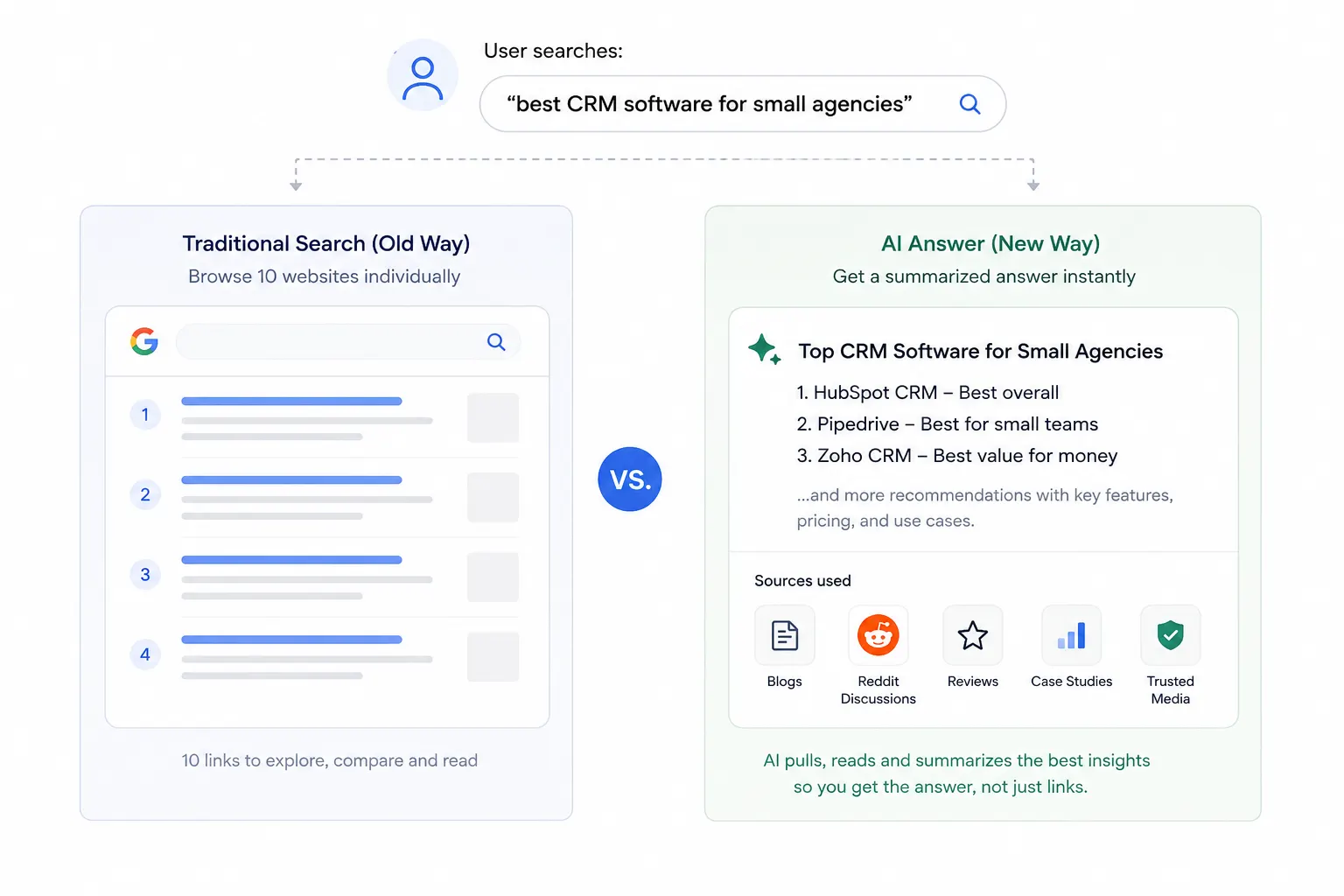
When a user searches for something like “best CRM software for small agencies,” they may no longer browse 10 websites individually.
Instead, AI systems instantly summarize recommendations by pulling information from diverse sources, including blogs, Reddit discussions, reviews, case studies, and trusted media mentions.
You Still Need Traditional SEO to Win in AEO
One of the biggest misconceptions right now is that AI SEO replaces traditional SEO.
It doesn’t.
In reality, strong AEO usually sits on top of strong SEO fundamentals:
- Technically sound pages,
- topical authority,
- internal linking,
- structured headings,
- fast-loading experiences,
- and high-quality content.
AI systems still need trusted sources.
So, traditional SEO vs. AEO – are they the same?
Yes and no.
Traditional SEO focused heavily on helping pages rank on search engines.
AEO focuses on helping content become part of AI-generated answers.
Instead of thinking “Will writing about this keyword rank this article?” – think about “whether this content will serve a specific use case”.
Here’s the simplest way to understand the difference:
| Traditional SEO | AI SEO / AEO |
| Focuses on ranking pages in search results | Focuses on becoming part of AI-generated answers |
| Optimizes around keywords and topics | Optimizes around intent, context, and usefulness |
| Success is measured by clicks and traffic | Success measured by citations, mentions, and visibility |
| Users compare multiple web pages | Users often receive one summarized answer and ask followups |
| Content is optimized for discoverability | Content is optimized for retrieval and extraction |
| Heavy focus on keywords | Natural language and conversational relevance matter more |
| Often optimized for search volume | Often optimized for solving specific user problems |
The core principle of SEO remains the same for AEO: create valuable content that satisfies search intent.
Does backlink still matter for AI SEO?
Again, there’s an ongoing debate on this.
But from my own experience and according to several industry leaders’ thoughts, it’s no longer necessary to have a high DA/DR website to get mentioned in AI search.
What do I mean by this? Well, if you have just started a new blog but produce high-quality content with first-hand experience and unique angles, chances are you will get mentioned in answer engines.
According to Neil Patel, branded mentions are more important than backlinks for AI visibility.
He shares this in his recent YouTube shorts:
14+ Effective Answer Engine Optimization Strategies For Content
Note: as I already mentioned, AEO is not vastly different than SEO. You still need a strong foundation in traditional SEO. So, many strategies mentioned here are not rocket science, but good old SEO best practices.
Part 1: Content Optimization
Most discussions around Answer Engine Optimization make it sound like a completely new discipline.
In reality, many AEO strategies are simply an evolution of good content marketing and SEO practices – adapted for AI-driven search experiences.
In this part-1 section, I discuss some of the most effective content optimization strategies for improving visibility across answer engines like ChatGPT, Google AI Overviews, Gemini, Perplexity, and other AI-powered search systems.
1. Match Intent & Establish Contextual Relevance
Modern AI systems are intelligent enough to understand why a user is searching – not just what keywords they typed.
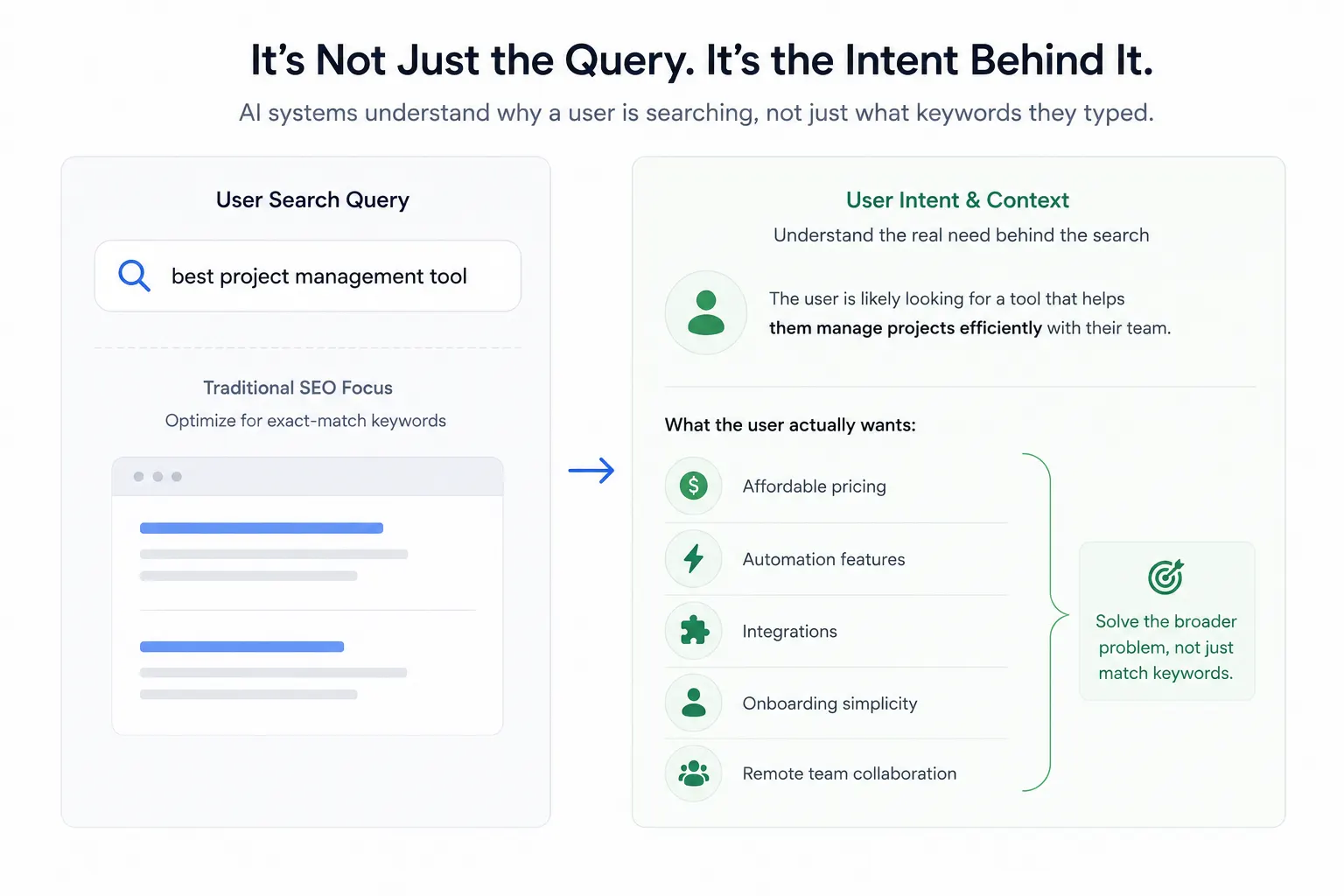
That means simply optimizing for exact-match keywords throughout a page is no longer enough. Your content should solve the broader problem behind the search query.
For example, someone searching:
“best CRM software for small agencies”
may actually want features such as:
- affordable pricing,
- automation features,
- integrations,
- onboarding simplicity,
- or remote team collaboration.
So, your content should cover these key concepts related to the intent.
That is why high-performing AEO content focuses heavily on the approach:
“Does this content genuinely solve the user’s problem rather than optimizing for search engines?”
2. Use Descriptive, Question-Style Headings
One of the easiest ways to improve retrieval and summarization is by using descriptive headings that closely match how real users ask questions.
Instead of vague headings like:
“Benefits of product personalization”
use:
“What Are the Benefits of Product Personalization in Shopify?”
Question-style headings help AI systems easily understand: the context of the section, the user intent behind it, and the exact question being answered.
3. Write Like a Human, Using Conversational Language
I know how that sounds. You are optimizing for machines while I am advising you to write like a human.
Yes, as much as I love AI tools, I would recommend you add that “personal human touch” to your content.
Because AI systems favor content that sounds natural, clear, and human.
Here are two examples for more clarity:
Bad Example: To maximize the efficacy of your content’s technical architecture, a strategic deployment of keyword density metrics is imperative.
Good Example: Just write naturally, and AI systems will favor your content.
I personally recommend the tools Hemingway Editor and Grammarly, which help in ensuring good readability as well as simplifying complex sentences.
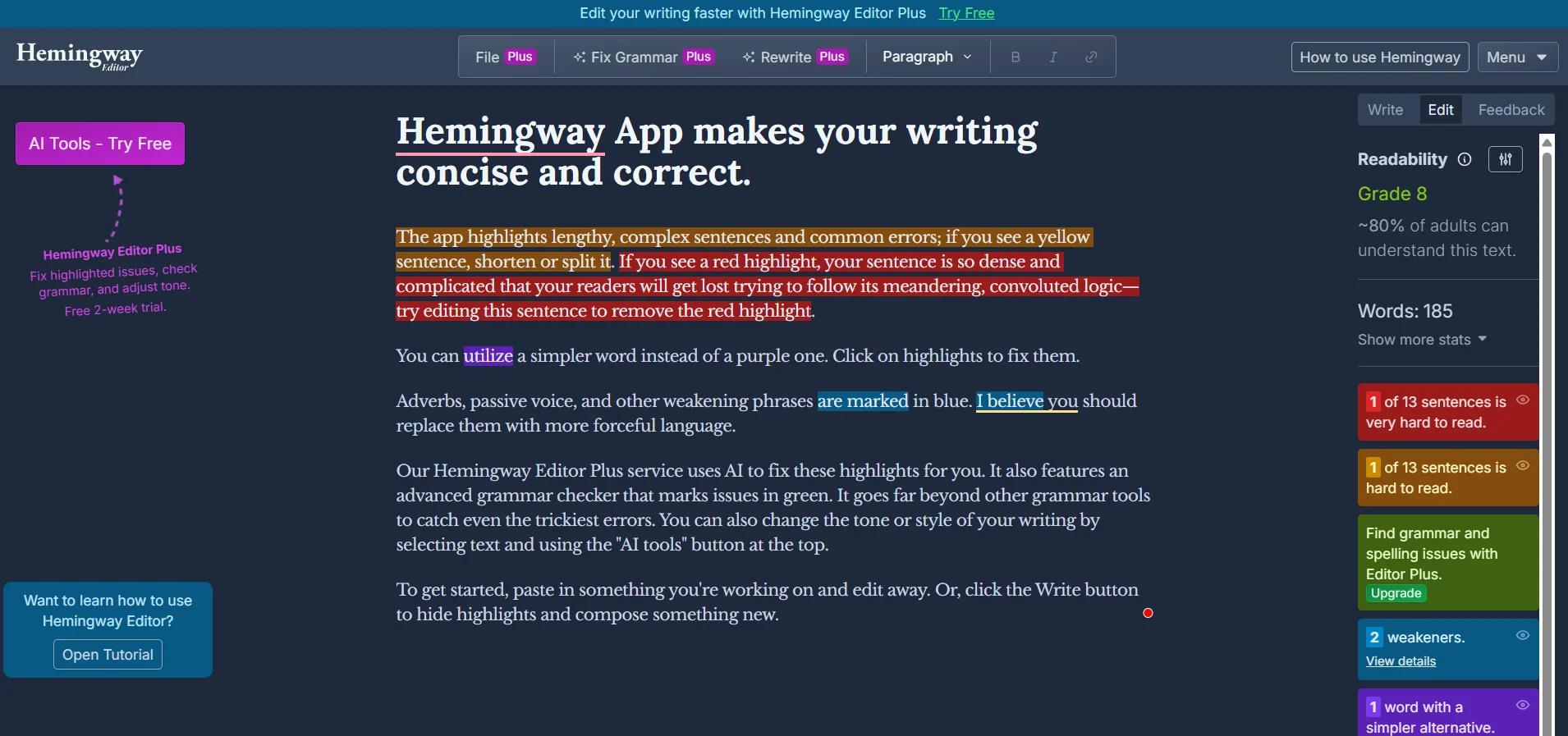
Hemingway, in particular, efficiently detects which sentences in your content need to be rewritten for better readability.
4. Optimize with Content Chunking for Easier Retrieval
Large language models do not process content the same way humans read webpages.
AI systems often retrieve and analyze information in smaller sections, or should we call it “chunks.”
That means content should be organized into:
- shorter paragraphs,
- clear headings and subheadings,
- focused explanations for each section,
- and logically grouped ideas.
Long walls of text are harder for both users and AI systems to process effectively.
From my own experience, I found that several new blogs simply ranked in AI search engines because their content was concise and to-the-point – instead of unnecessary filler sections.
(which is what I am trying to do in this article as well)
Here is an amazing guide from SEMRush about content chunking.
5. Write Direct Answers for Each Section
One of the simplest yet most powerful AEO techniques is answering questions directly and early, under each heading. Think of every section as a potential standalone answer block.
Great writers are also great thinkers. That is a good thing – but only if you don’t stray further from the main point.
As already mentioned, AI searches comb through the entire web and bring the best “chunks” of content to the users. So, each section of your article should be valuable.
Answering the very first line increases the chance of that section being cited by AI tools.
6. Ensure Positive Information Gain
Information gain refers to how much new, unique, or valuable information your content contributes compared to other pages covering the same topic.
One useful mental model is this:
→ Information Gain = Existing Knowledge + New Value
Now, with the increasing use of AI, one of the biggest problems with modern written content is repetition. Thousands of articles now say the same thing using slightly different wording.
AI systems already have access to that consensus information, so why should they cite your article discussing the same thing?
Rather, AI search engines now reward content that includes:
- original insights,
- unique workflows,
- first-hand experience,
- internal research data,
- proprietary frameworks,
- or deeper analysis.
Here are some practical ways to increase positive information gain:
| Weak Content | Strong Information Gain |
| Rewriting existing articles | Adding original examples and unique insights |
| Generic definitions | Explaining concepts with real-world context |
| Surface-level tips | Providing frameworks, workflows, and deeper analysis |
For example, compare these two approaches:
Generic Content:
“Content freshness is important for SEO.”
Higher Information Gain:
“We updated 15 older blog posts with newer screenshots, fresh statistics, and AI-focused sections. Within 60 days, 9 pages regained featured snippets and organic traffic increased by 23%.”
Much better, right?
This is the kind of content AI systems are more likely to trust, summarize, and reference.
7. Use Consistent Messaging for Brand & Products
According to a study by Lucidpress, consistent brand presentation can increase revenue by up to 33%.
This becomes even more important in AI-driven search because answer engines rely heavily on entity understanding and contextual consistency across the web.
Look at the product messaging comparison here:
| Inconsistent Messaging | Consistent Messaging |
| “AI writing tool” | “AI content optimization platform for SEO teams” |
| “Marketing automation app” | “AI-powered content workflow platform” |
| “Copywriting assistant” | “Content optimization platform for marketers and publishers” |
Notice the difference? When you are consistent, you are not deviating from the core offering of your product.
On the other hand, the inconsistent version makes it difficult for AI systems to confidently associate your product with a clear category or use case.
So, how to manage this efficiently? I suggest creating a brand and product knowledge hub for your team, which includes:
- core product description,
- target audience,
- primary use case,
- key differentiators,
- brand messaging
And so on.
Then use those consistently across your blogs, landing pages, YouTube descriptions, LinkedIn posts, PR mentions, and more.
8. Maintain Content Freshness with Regular Updates
AI search systems (as well as Google) strongly prioritize content that feels current and actively maintained.
Outdated statistics, broken screenshots, expired tools, and old recommendations reduce trustworthiness.
Now, this does not always require rewriting entire articles. Sometimes small updates make a major difference, such as adding a new FAQ, updating screenshots, revising product descriptions, and so on.
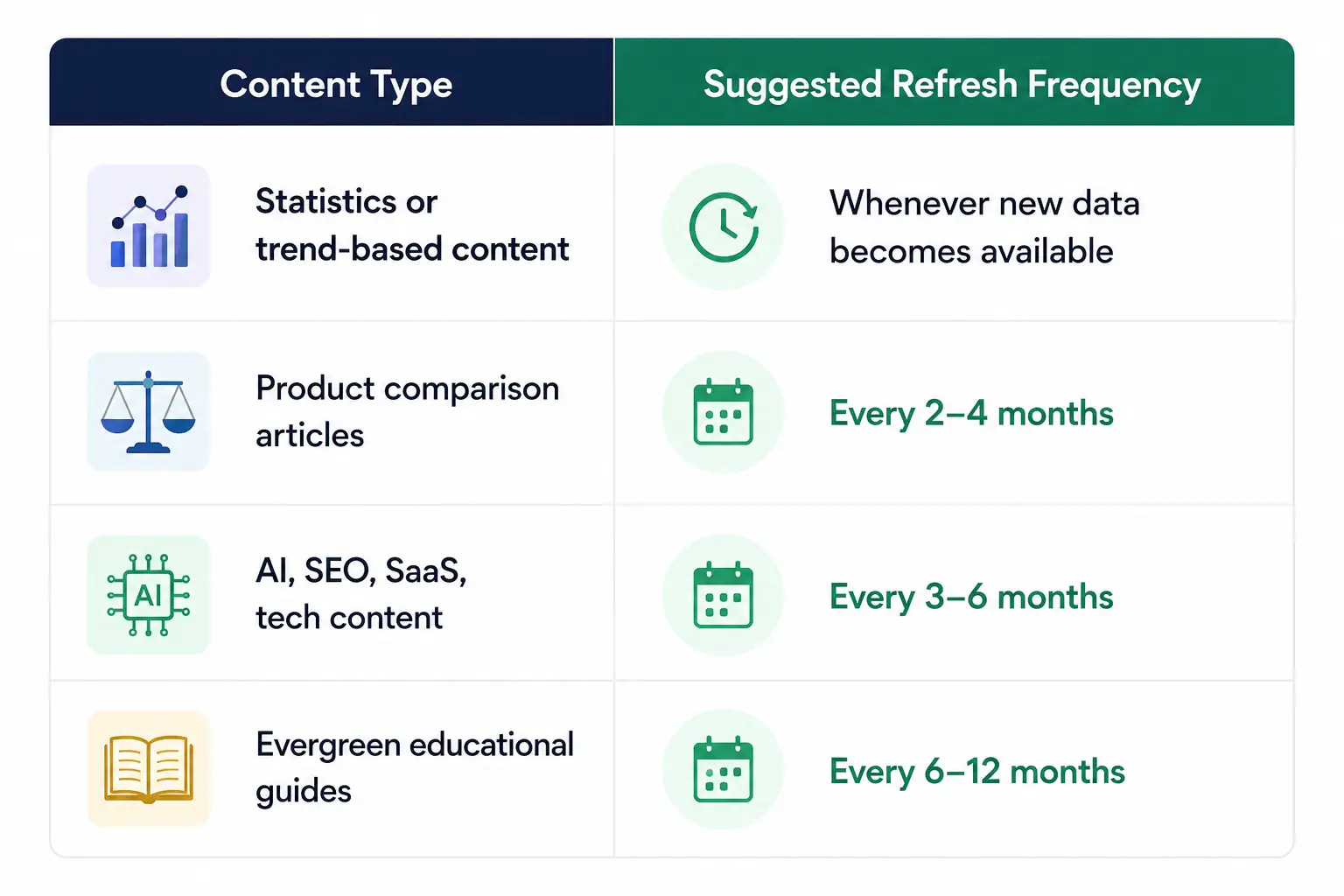
So, what should be the frequency for content updates?
It will depend on the type of content. Here’s the recommended timeline many successful content teams follow:
Part 2: Authority & Trust
AI systems (as well as traditional search engines) do not just evaluate what your content says. They also evaluate whether your content appears trustworthy enough to surface confidently.
Google itself has repeatedly emphasized the importance of experience, expertise, authority, and trustworthiness through its E-E-A-T quality guidelines. According to Google’s own documentation: Google Search Quality Evaluator Guidelines.
Answer engines do not work differently. In this section, I discuss in detail how you can establish authority and trust in your content so it works for AEO (as well as SEO).
9. Add First-Hand Experience
First-hand experience makes your content significantly harder to replicate.
Anyone can summarize information from existing articles. But original experience creates a unique context that AI systems cannot easily find elsewhere.
For example, compare these two approaches:
| Generic Content | Experience-Driven Content |
| “This SEO tool has useful keyword features.” | “After testing the tool for 3 months across 11 SaaS blogs, we found its keyword clustering feature reduced content planning time by roughly 40%.” |
The second example introduces: specificity, context, measurable outcomes, and authentic experience.
To ensure your content is optimized for trust and authenticity, you can include:
- original screenshots,
- workflow examples,
- implementation challenges,
- lessons learned,
- and actual results.
These elements make content feel more credible, human, and useful.
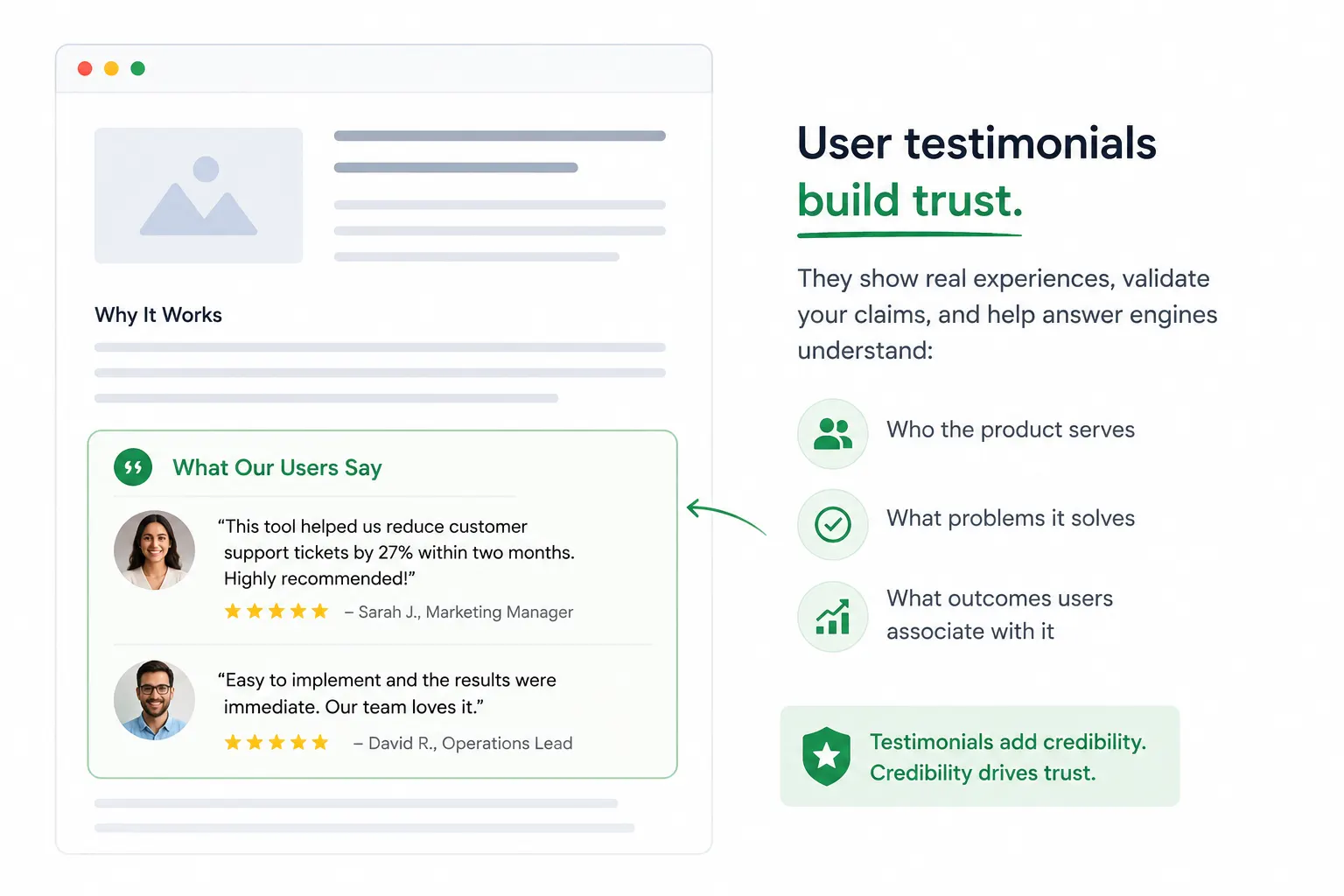
10. Include User Testimonials
Adding user testimonials is another effective way to reinforce trust through external validation. Testimonials help search engines understand:
- who the product serves,
- what problems it solves,
- and what outcomes users associate with it.
According to research from BrightLocal, consumers prefer fresh reviews and choose businesses that have more than 4.5-star ratings – which means they do research online before making a purchase decision (not a shocker, I know!)
So, what does it mean for your content? I recommend adding relevant testimonials that complement the products mentioned in your article.
You can add screenshots of the testimonials, add quotes, or simply summarize what the users have said.
11. Analyze and Add Forum Insights
Instead of simply summarizing existing insights from competitor blogs, incorporate what real users are saying about a topic on online forums.
If you didn’t know already, platforms like Reddit, Quora, and niche forums have exploded in search visibility.
According to Sistrix research, Reddit’s visibility in Google search results increased by roughly 191% in 2024 alone. Other industry reports showed Reddit jumping from around the 80th most visible domain on Google to the top 10 within a very short period.
So, why this shift? Because users increasingly trust real experiences over generic marketing content.
Forum discussions often contain authentic experiences and nuanced opinions that traditional blog posts fail to cover.
So, how do you leverage this forum data to optimize your content for AI visibility?
Here’s a simple workflow that works well:
- Search Reddit and niche forums around your topic
- Identify recurring frustrations, opinions, and discussions
- Incorporate those insights naturally into your content
- Add clarification or an expert perspective around them
The goal is to acknowledge the common user pain points and opinions and then add your own insights.
12. Produce Off-Page Content For Brand Mentions
The more frequently your brand appears across trusted and contextually relevant sources, the stronger your semantic association becomes around specific topics and use cases.
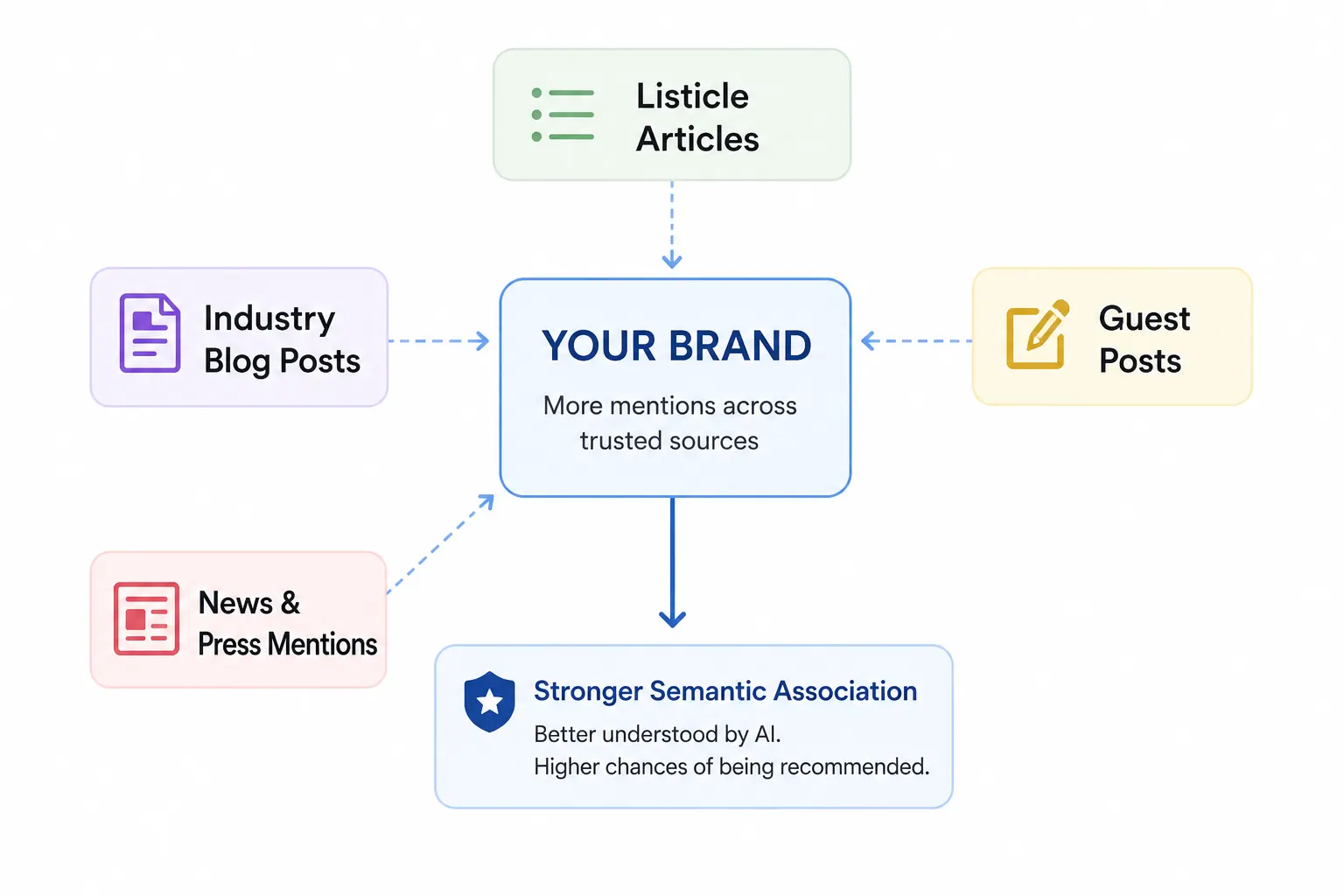
An Ahrefs analysis of 75,000 brands found that branded web mentions were among the strongest correlations for appearing in AI Overviews.
This is why off-page visibility is more important than ever. Yes, you want to do it anyway for backlinks. But even if you don’t get links, branded mentions are essential for Answer Engine Optimization.
Here are two effective ways to do this:
i. Get Included in Third-Party Listicle Articles
Use cold outreach to get your product mentioned in “best tools” style articles, such as:
- Best SEO Tools
- Best WordPress Plugins
- Best AI Writing Tools
AI systems frequently pull recommendations from these comparison-style pages.
ii. Write Guest Posts on Relevant Websites
Publishing guest posts on trusted industry websites helps strengthen topical authority and brand recognition.
Even simple contextual mentions of your product inside educational guest posts can reinforce your brand’s semantic association across the web.
Part 3: Distribution & Visibility
Often, as content marketers, we forget to
13. Produce Multi-Format Content
When planning content for a specific topic, think beyond a single format. A strong modern content strategy should include:
- long-form blog posts,
- YouTube videos,
- short-form video clips,
- LinkedIn posts,
- Reddit discussions,
- and other supporting formats.
This matters because both AI search engines and traditional Google Search are rapidly evolving toward multi-format SERPs.
Search results no longer show only “10 blue blog links.”
Today, search engines show a mix of blogs, videos, forum discussions, social posts, and so on.
Google itself is creating more multimodal search experiences that allow searching and viewing different types of content effortlessly.
That means brands producing content across multiple formats gain more visibility opportunities and broader audience reach.
14. Repurpose Content for Omnichannel Presence
Your content should be repurposed and redistributed across multiple marketing channels.
One of the biggest content mistakes brands make is publishing a piece of content once and then forgetting about it.
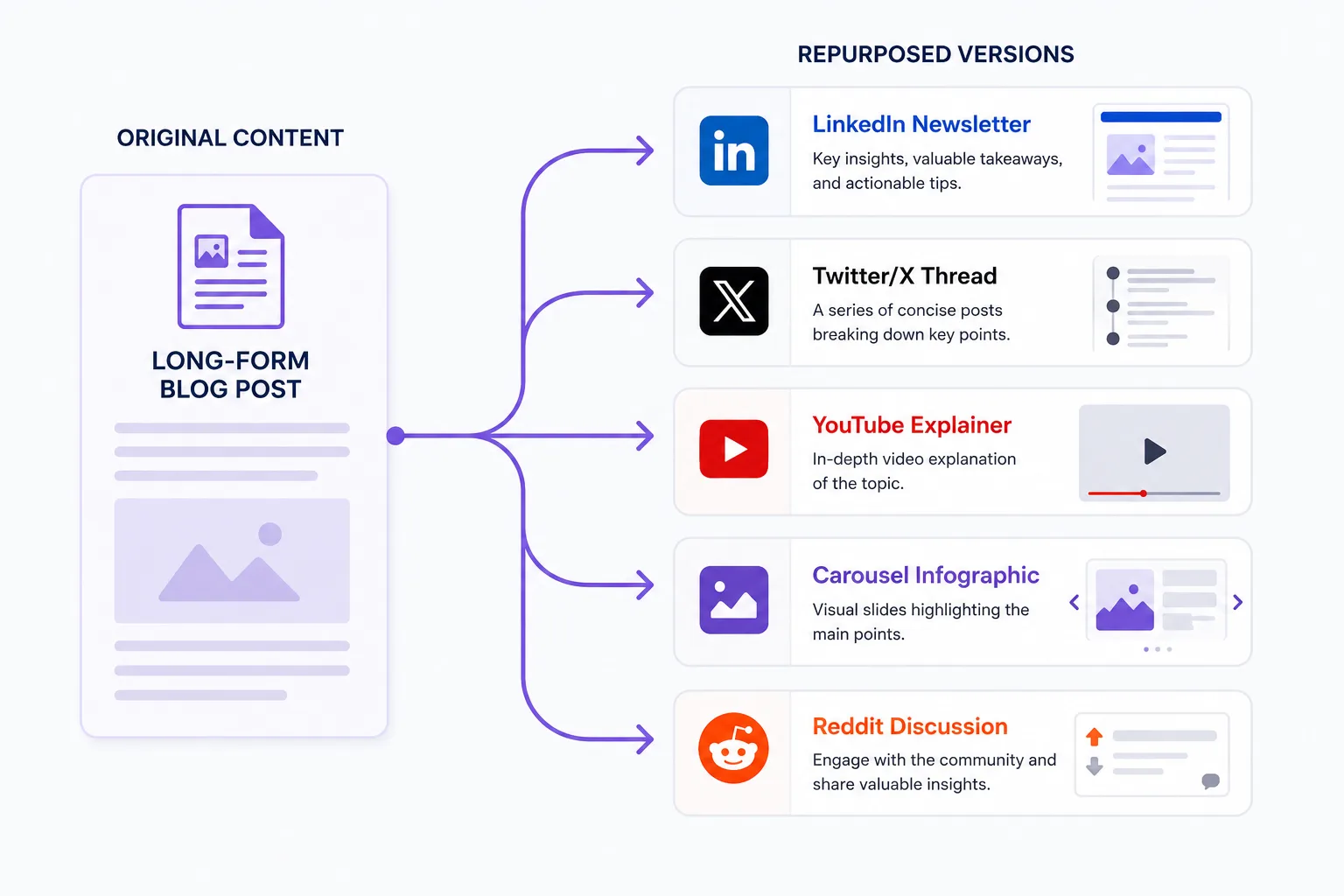
For example, a single blog post can become:
- a LinkedIn newsletter,
- a Medium article,
- a series of Twitter/X posts,
- multiple LinkedIn posts,
- infographic slides,
- short-form videos,
- Newsletter topics
The goal is not spamming every platform.
The goal is to create repeated visibility around the same topic across multiple searchable environments.
The more consistently your brand appears discussing a topic, the stronger your topical association becomes in both traditional search and AI-generated search systems.
What Does Google Say About Answer Engine Optimization?
According to Google’s official documentation on AI-powered search features:
“There’s nothing special creators need to do to be considered other than following our regular guidance for appearing in search.”
This statement aligns with what I mentioned earlier – AEO is not a completely separate optimization discipline.
However, Google also makes it clear that search behavior itself is evolving.
So, traditional search is shifting to cater to user behavior that includes:
- longer questions,
- follow-up queries,
- nuanced comparisons,
- and contextual problems.
Therefore, optimizing your content accordingly so that it serves a specific use case, including expert opinion and experiences, is more important than ever.
Google’s AI search features documentation also suggests maintaining a good technical foundation for your website, recommending that you:
- use structured data,
- maintain crawlable pages,
- organize content clearly,
- and follow technical SEO best practices.
Case Study: How WPXPO is Approaching AI SEO
So, let’s talk real-life examples.
Instead of only talking about concepts, I wanted to share some practical things we experimented with at WPXPO and what actually helped us gain visibility across AI-powered search experiences.
We started with one fundamental shift in approach: AI visibility is not only about publishing a blog post anymore.
It is about creating a broader content ecosystem around a topic.
Repurposing Content Helped Us Gain Faster AI Visibility
One of the most effective things we experimented with was repurposing our blog content into multiple formats and platforms.
For example, after publishing a blog post around one of our newer products, we repurposed the topic into a LinkedIn newsletter.
Within 2 weeks, the newsletter started to rank for commercial keywords in the AI Overview.
That was a huge signal for us.
Instead of relying only on website rankings, we started thinking:
“How can we increase topical presence across the web?”
That shift alone changed our entire content strategy.
Experience-Driven Content Performed Better
Another thing that consistently helped our content perform better in AI search was making the articles genuinely experience-driven.
Instead of writing generic listicles, we focused on:
- adding first-person insights,
- including actual user reviews,
- and even mentioning limitations or negative feedback when relevant.
Including balanced perspectives improved the overall quality of the content.
As part of this approach, several of our listicle articles started gaining visibility across AI search engines after we shifted toward this approach.
Adding Reddit Discussions Became Unexpectedly Powerful
One of the most interesting experiments we tried was adding the discussions from relevant Reddit threads directly into our blog content.
For example, in an article discussing our product PostX, we included real Reddit discussions and user opinions around the topic.
Not long after, we noticed something fascinating:
Google AI Overview directly referenced the Reddit-based insight included within the article.
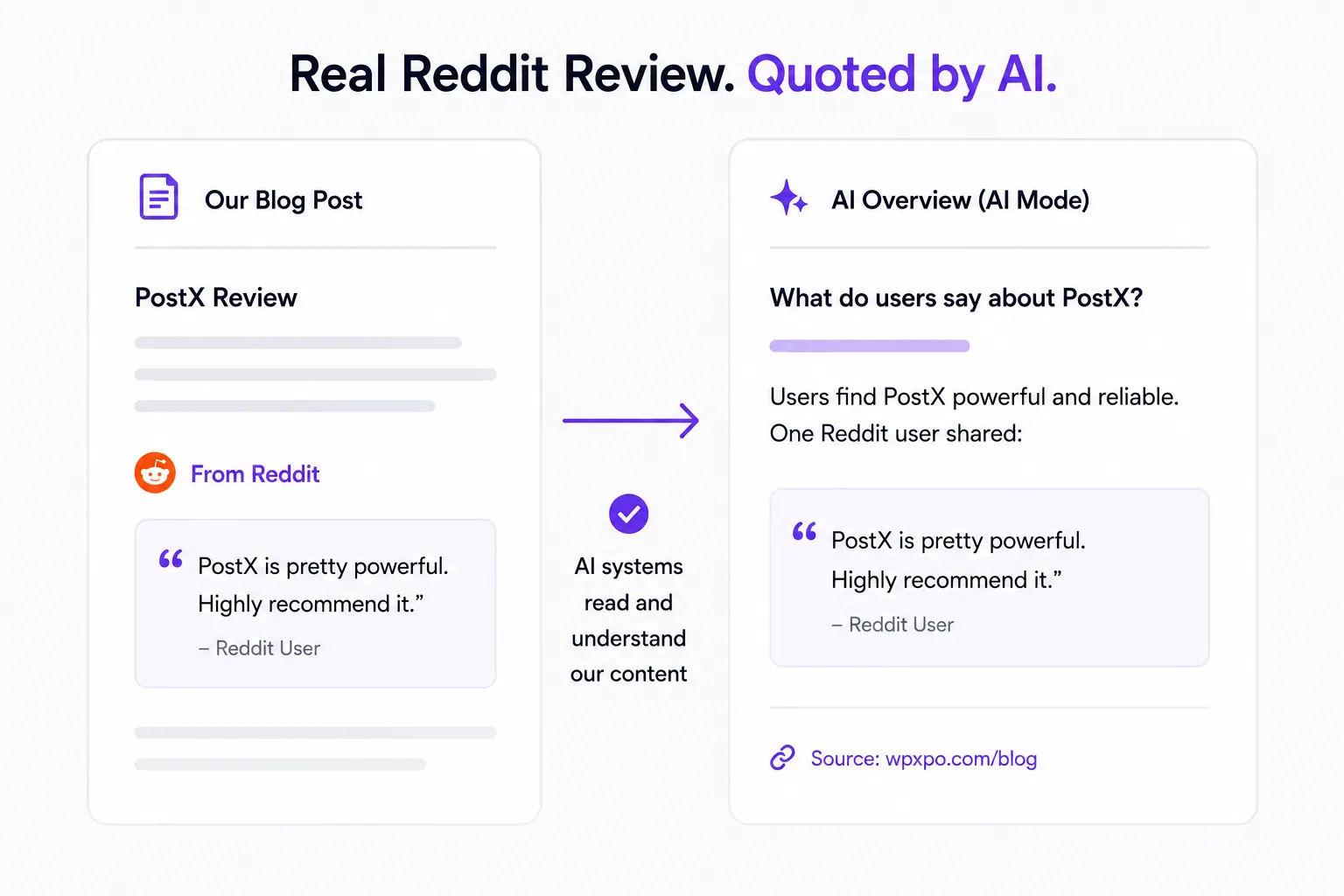
That was a major learning moment for us.
It showed that:
- community discussions,
- authentic user sentiment,
- and real-world opinions
can significantly strengthen contextual relevance for AI systems.
Guest Posting Increased Brand Mentions Across Search
Another strategy we prioritized was contributing guest posts to third-party websites around the same topics we were covering internally.
This helped us in multiple ways simultaneously: increased brand mentions, broader SERP visibility, and higher semantic relevance around our products.
Over time, we noticed that both our own articles and guest-contributed content started appearing together across traditional search results and AI-generated search experiences.
Summing Up
Answer Engine Optimization is changing how content gets discovered online. Instead of simply ranking webpages, modern AI-powered search systems now retrieve, summarize, and recommend information directly from multiple sources across the web.
The good news is that AEO is not completely different from traditional SEO. Strong technical foundations, helpful content, topical authority, and user-focused writing still matter deeply.
The difference is that AI systems evaluate context, semantic relevance, and real-world use cases and match them to content that covers those specific points.
Going forward, the brands that win in AI search will not be the ones publishing the most content. They will be the ones creating the most helpful content ecosystems across blogs, videos, forums, newsletters, social media, and other platforms.
In many ways, modern SEO is becoming less about ranking pages and more about becoming the most reliable answer.